



Kerala’s Festival Elegance: Styling Secrets of Malayali Women

Malayali women typically style themselves for festivals with a blend of elegant white-and-gold attire, traditional gold jewellery, fragrant flowers, and subtle, graceful grooming that together create a look you can recognise instantly as “Kerala.”
Kerala set saree (kasavu) and overall look
For major festivals like Onam and Vishu, the most iconic outfit is the Kerala kasavu saree or set mundu: an off‑white or cream handloom cotton or silk garment with a rich golden sari border. Many women choose the two‑piece set sari (set mundu) or a full kasavu saree, pairing it with a fitted blouse in cream, gold, or festive colours like green or maroon.
The styling is usually completed with neatly braided or bun‑tied hair adorned with jasmine flowers (Mulla or Gajra), simple yet striking makeup, and gold bangles to echo the golden borders of the saree. This white‑and‑gold palette gives Malayali festival fashion its serene, timeless character and makes it stand out from more heavily embellished regional looks.
Signature jewellery: Palakka Mala

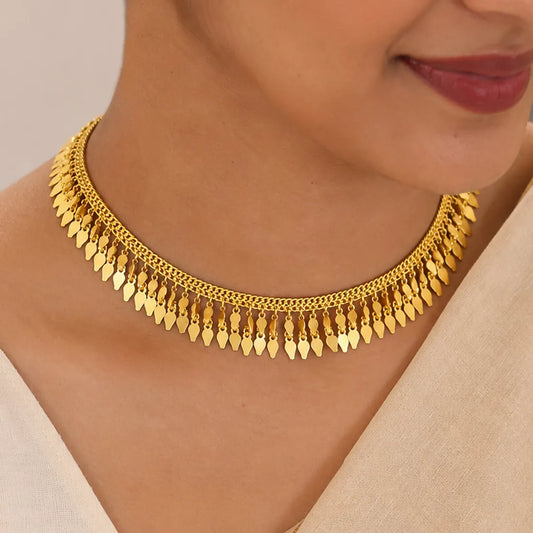
Palakka mala is one of the most loved traditional Kerala necklaces and a staple for festive and bridal looks. It features leaf‑shaped elements, traditionally set with green stones such as emeralds or imitation green glass, bordered in gold and strung together in rows.
Originally, Palakka was made only in green to reflect Kerala’s lush nature, but today you see variations in red, blue, violet, and other hues while keeping the same leaf motif. Women wear Palakka as chokers, long harams, pendants, bangles, and earrings, often layering it over a kasavu saree so the green and gold stand out beautifully against the cream fabric.
Signature jewellery: Mango Mala (Manga Mala)
 Manga mala (mango mala) is another classic Kerala necklace, especially associated with bridal trousseaus. The chain is composed of repeated mango‑shaped pendants or beads, typically crafted in gold, sometimes accented with stones, arranged to form a rich, continuous pattern.
This design is considered one of the most representative styles of Kerala jewellery and is frequently worn along with the kasavu saree during weddings, temple festivals, and Onam celebrations. When layered with Palakka and other temple necklaces, the mango mala adds a sense of abundance and auspiciousness to the overall look.
Signature jewellery: Kasu Mala

Kasu mala (also called Lakshmi Mala) is a coin necklace that symbolises prosperity and status in Kerala. It is made of small, round gold coins strung closely together, often embossed with the figure of Goddess Lakshmi, giving it a strong cultural and devotional significance. Sometimes embossed with the sovereign's head from European coins.
Historically, kasu malas were cherished heirlooms among Nair and Namboothiri women and formed an important part of a Kerala bride’s jewellery collection. Paired with the white‑and‑gold kasavu saree, kasu mala creates a striking festival aesthetic: the coins catch the light against the simple fabric, highlighting both opulence and restraint.
What makes Malayali festival styling unique
Malayali women’s festival styling is unique because it balances minimalism in clothing with richness in jewellery. The off‑white kasavu set saree or mundu is intentionally simple, while layered pieces like Palakka mala, mango mala, kasu mala, temple chokers, and gold bangles add depth, tradition, and visual drama.
The consistent use of the white‑and‑gold colour story, natural flowers in the hair, and jewellery designs strongly rooted in Kerala’s heritage makes these looks immediately recognisable anywhere in the world. Even in modern trends, Malayali women often blend contemporary minimalist pieces with these classics, but the core elements – kasavu saree and traditional gold jewellery – remain central to festival style.
For Onam and Vishu, the usual styling is to keep it elegant and balanced: Palakka sits closest to the neck, Mango mala is worn in the middle, and Kasu mala is worn as the longest layer. This creates a classic Kerala stack that looks especially beautiful with a kasavu saree or set mundu.
Onam styling
For Onam, women often choose a lighter version of the traditional stack, usually one strong statement necklace plus simpler earrings and bangles. A Palakka mala with matching earrings and bangles is a very popular choice because the green stonework contrasts neatly with the white-and-gold saree.

If the look is more festive or grand, a Kasu mala can be added below the Palakka mala, with a Mango mala in between to soften the transition. The result is traditional, rich, and still clean enough for the bright, graceful Onam aesthetic.
Vishu styling
For Vishu, the same layering idea is used, but the styling is often slightly softer and more family-oriented than bridal wear. Many women wear Palakka or Kasu mala with minimal extra pieces, especially when the outfit is a simple set saree or mundu.

If multiple necklaces are worn, the order usually stays the same: Palakka closest to the neck, Mango mala in the middle, and Kasu mala longest. This keeps the jewellery visible without overcrowding the neckline, which suits Vishu’s traditional and auspicious mood.
Wedding layering
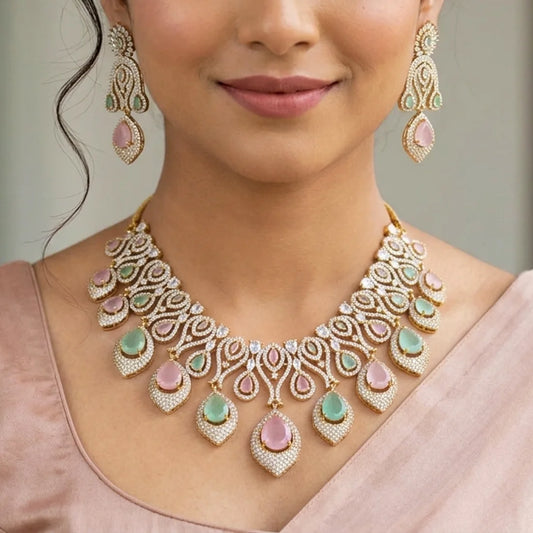
For weddings, the full bridal stack is more elaborate and often more symmetrical. The classic arrangement is Palakka mala as a choker or short layer, Mango mala as the medium layer, and Kasu mala as the longest layer, often paired with a temple haram and matching bangles.

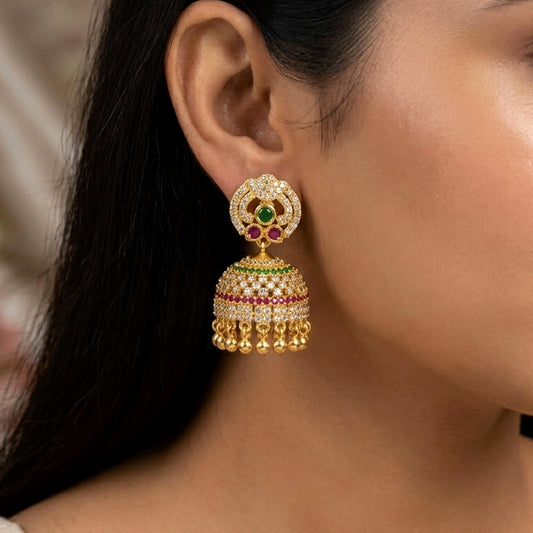
Brides may add jhumkas, hair accessories, waist belts, and additional harams to complete the look. This layered style works because each necklace has a distinct shape: Palakka gives the green-leaf accent, Mango mala adds traditional Kerala form, and Kasu mala brings the coin-like bridal richness.
Simple rule
A useful way to remember the order is: short, medium, long. Palakka goes nearest the neck, Mango mala sits below it, and Kasu mala finishes the stack as the longest piece.
Kerala’s festival style is not just about clothes and ornaments; it is a living expression of culture, memory, and identity. From the timeless white-and-gold kasavu saree to the graceful layers of Palakka, mango mala, and kasu mala, every element tells a story of tradition carried forward with pride. As Malayali women continue to blend heritage with modern tastes—whether dressing for Onam, Vishu, or weddings—their elegance remains unmistakable: rooted in simplicity, enriched by meaningful jewellery, and illuminated by the quiet confidence of a culture that wears its legacy beautifully.